
Templates
A Storyboard Of Growth
This template can be used as a summative assessment for babies.
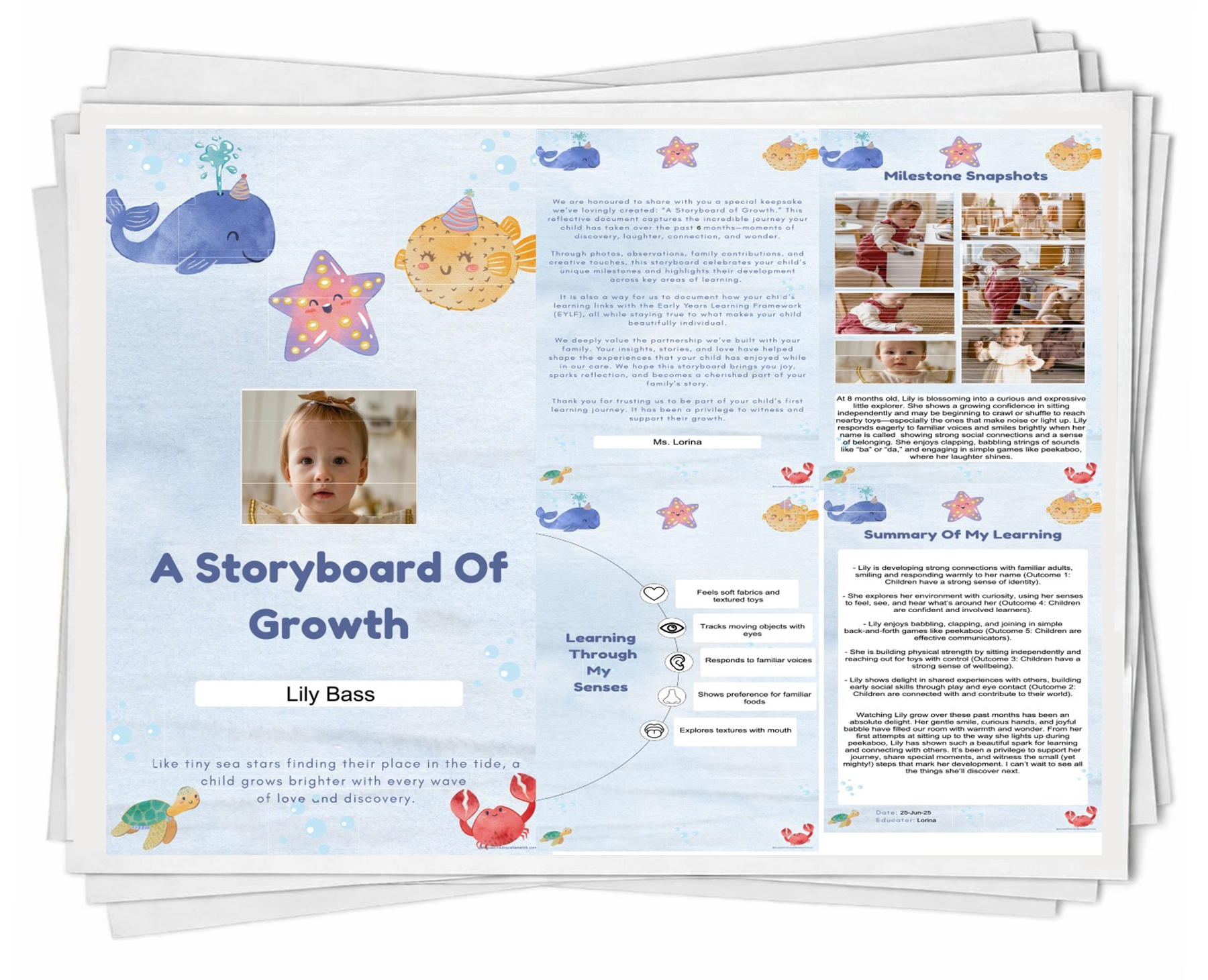
This template can be used as a summative assessment for babies.
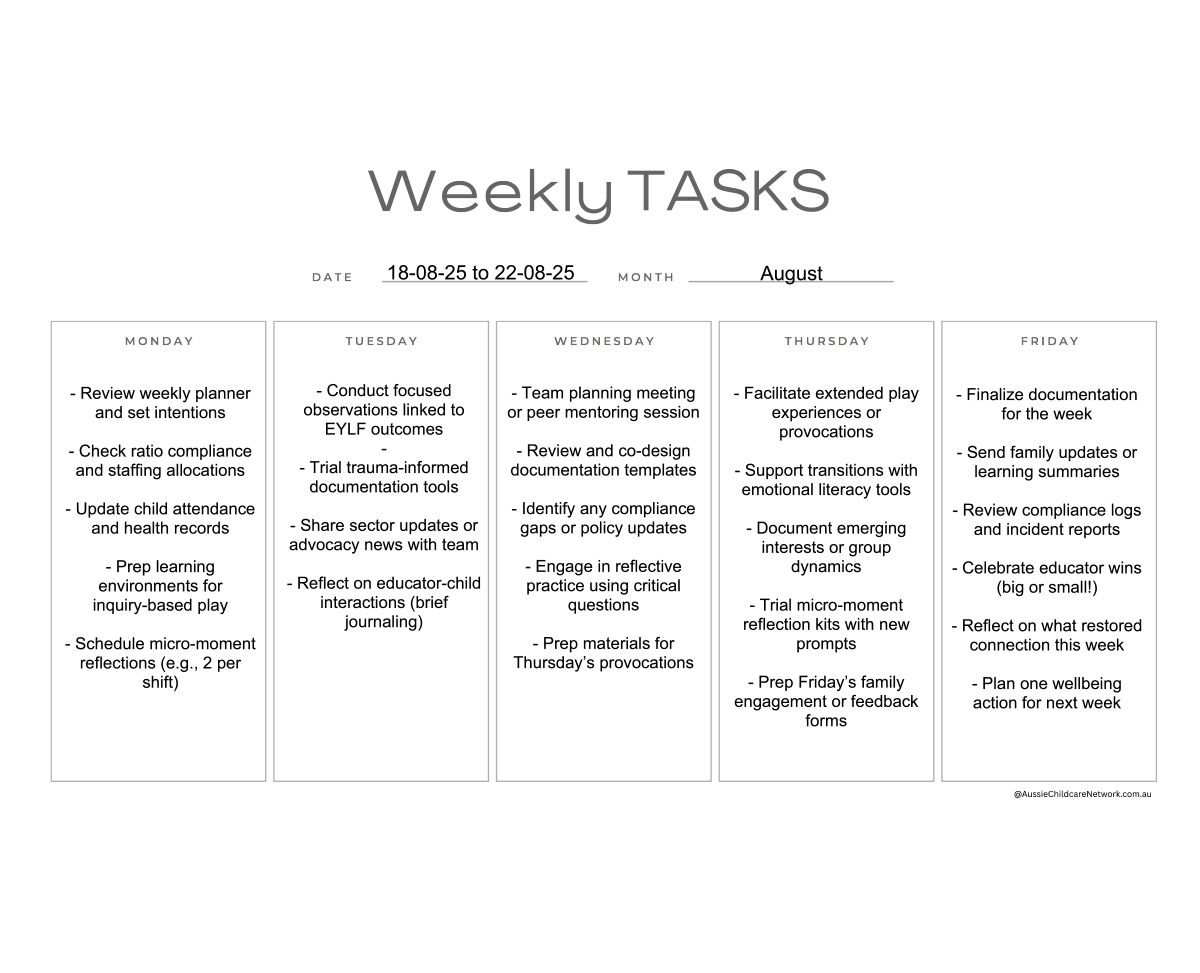
This template can be used by educators throughout the week.
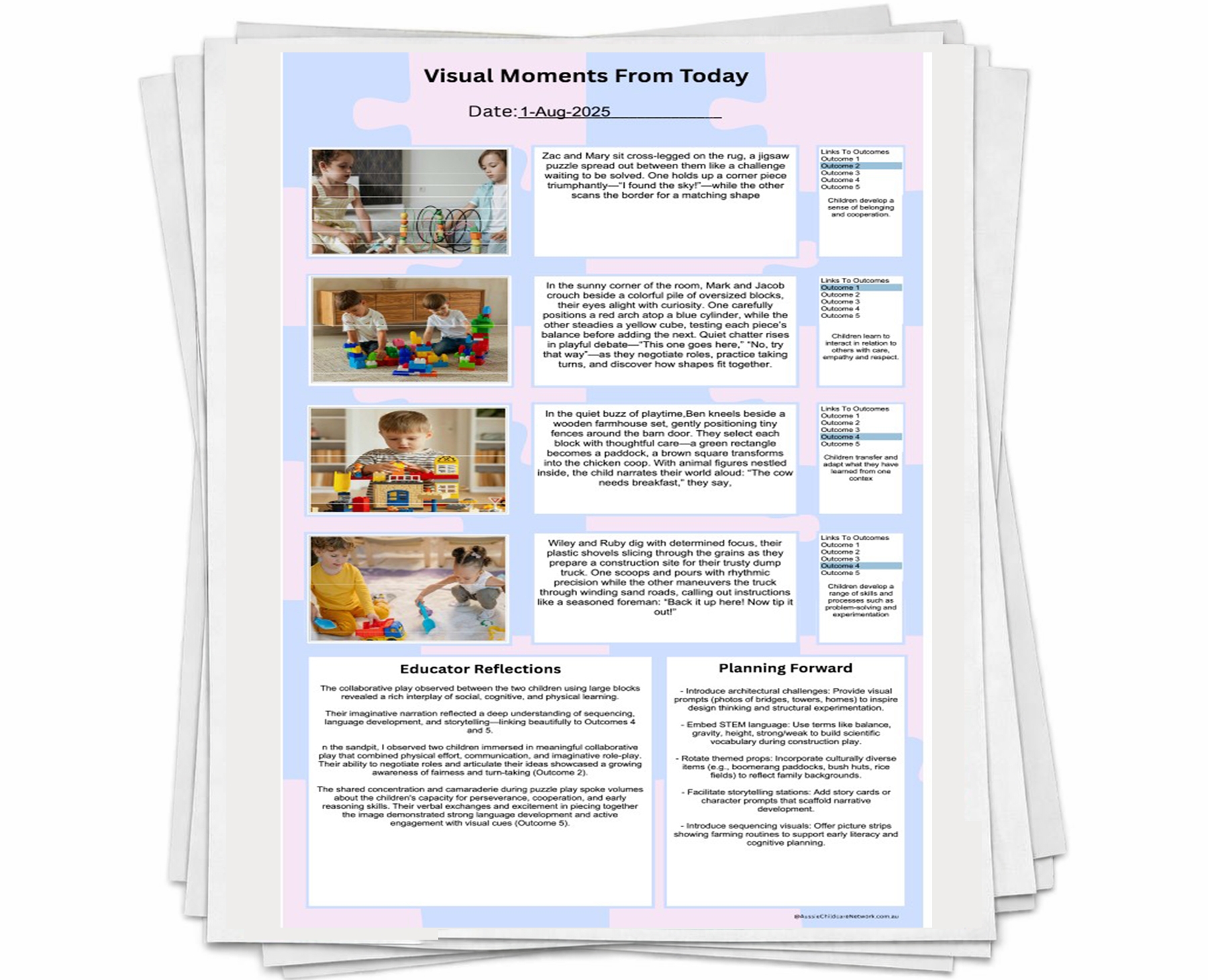
This template can be used as a daily diary to showcase the experiences that took place throughout the day.
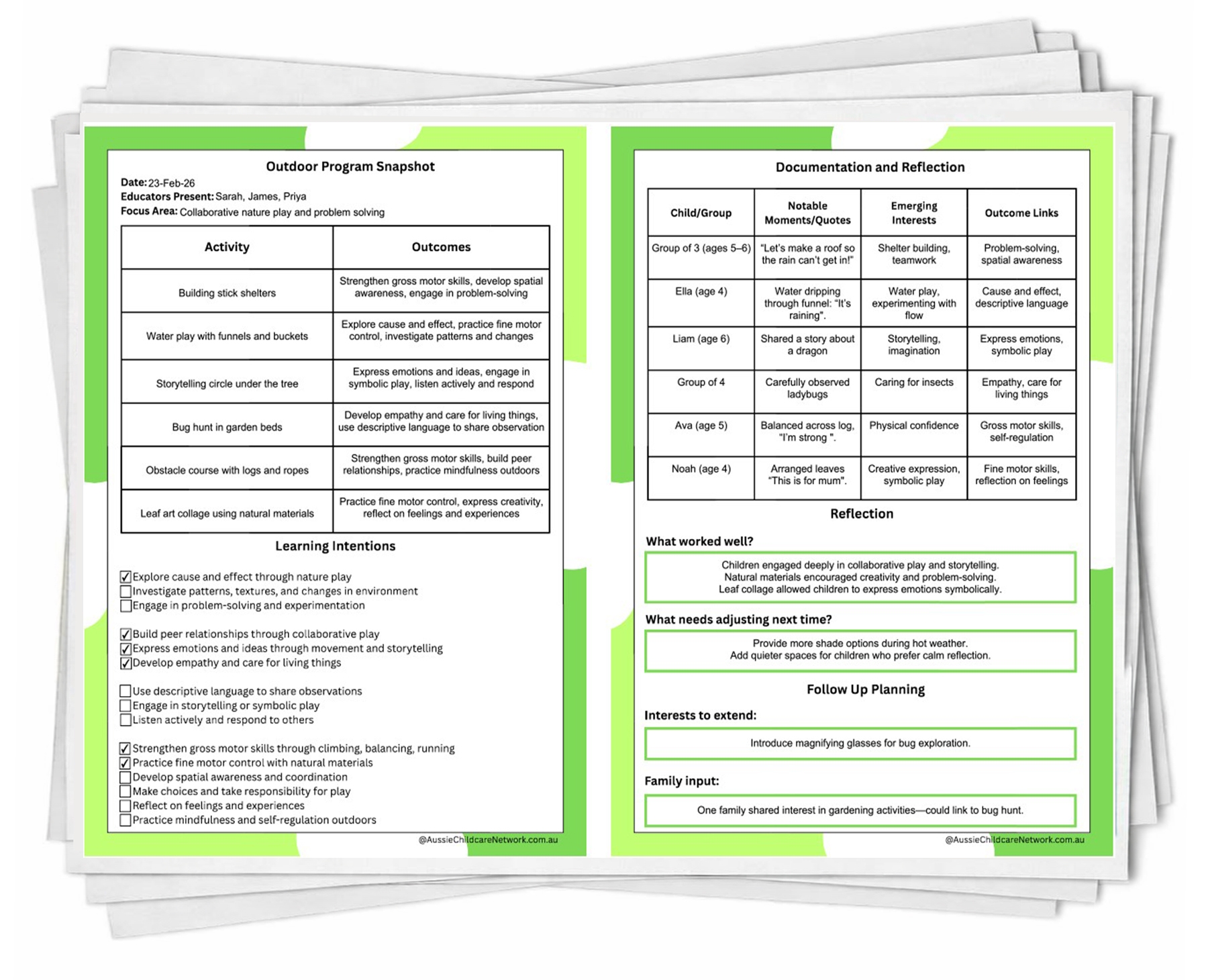
This template is to be used as an outdoor program plan.
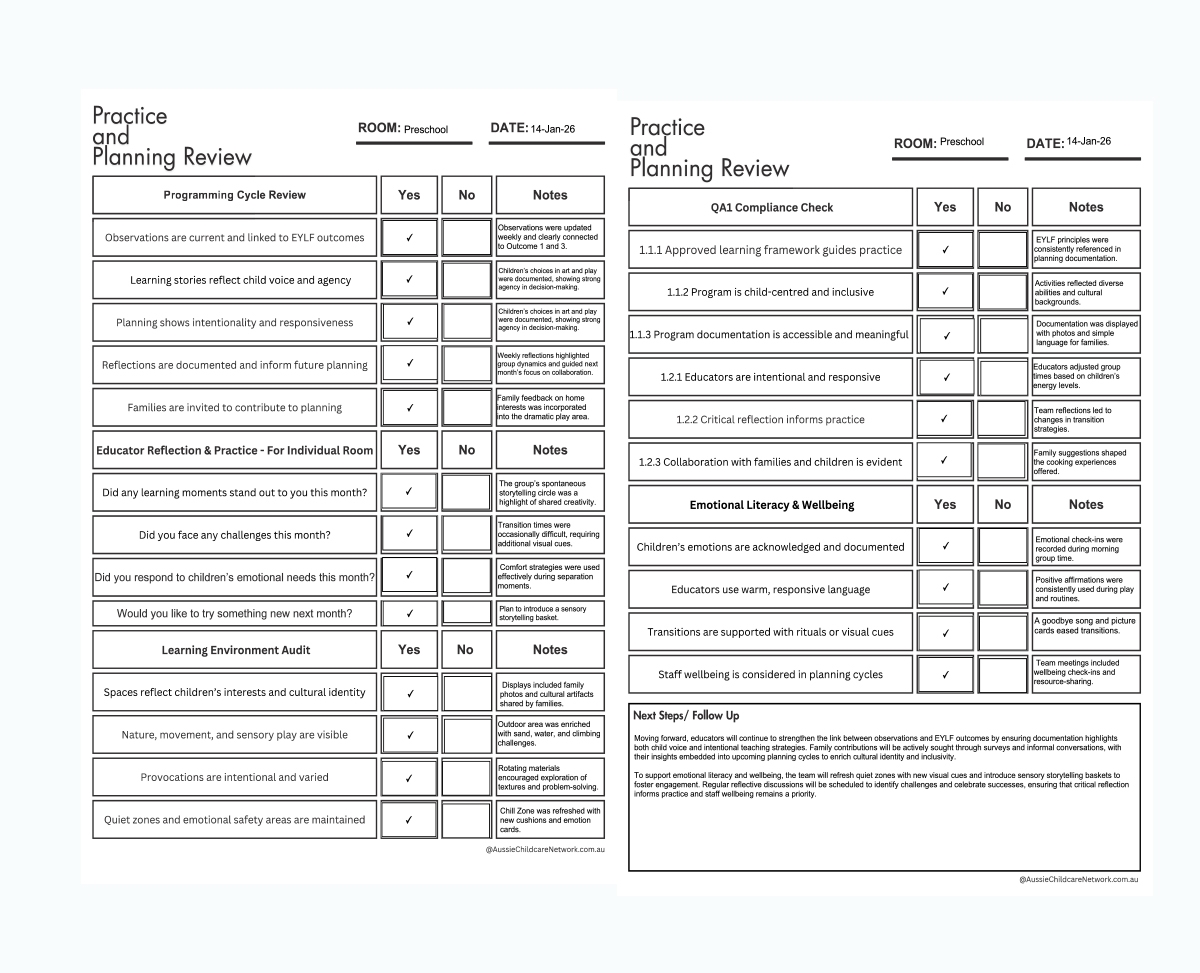
This template is to be used by the educational leader as a checklist for practice and planning in each room.
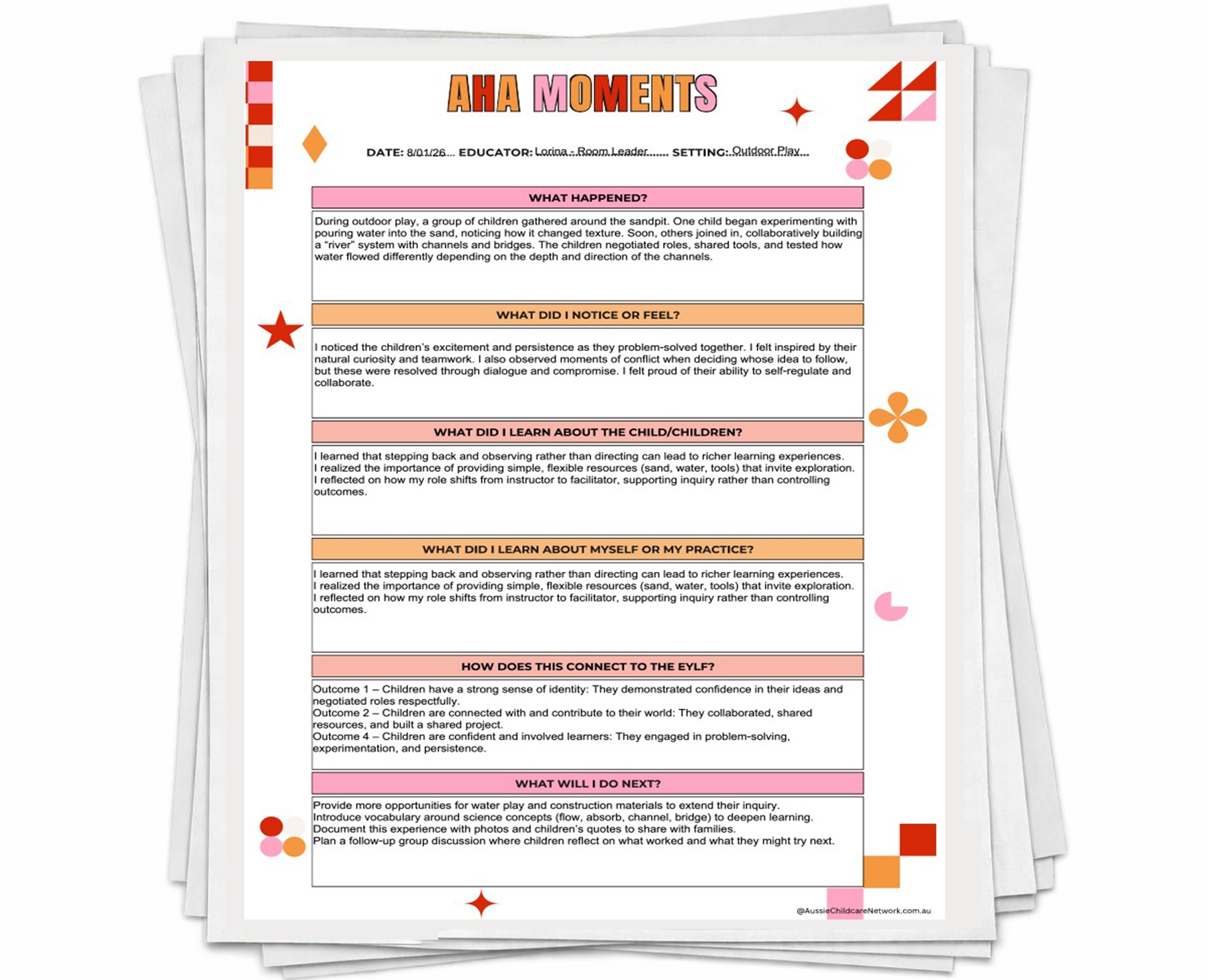
This template is used to reflect on a special moment.
One of the most important types of documentation methods that educators needs to be familiar with are “observations”. Observations are crucial for all early childhood settings and are used t

Writing observations for babies and young children enables us to observe the countless opportunities for growth and development that take place. The following article provides information on

Photo Observations are a perfect visual tool to capture a child's learning during an experience and provides an insight into the child's skills and development.
Coming up with extension ideas during early childhood observations involves identifying ways to build on a child's interests, skills, and developmental needs. The following article provides

Applying theorists in observations involves connecting your observations of children’s behaviors, interactions, and development to established theories of learning and development. This appr

A: Not necessarily! While follow-ups can be valuable, they aren't always required. Observations and learning stories serve different purposes, and whether a follow-up is needed depends on th

A: There’s no fixed number of observations required from educators across all early childhood services in Australia—it depends on your service’s philosophy, policies, and the needs of the ch

A: When analysing observations, selecting the right learning outcome depends on several factors:

A: No. There is no requirement in the National Regulations, the EYLF, or ACECQA guidance that says educators must add EYLF outcome numbers, sub‑outcomes, or codes to observations. Linking is

Creating open-ended observations in early childhood settings is all about capturing the richness of a child’s experience without judgment, assumptions, or leading interpretations. These obse
A: While photos can enrich documentation by capturing moments visually, many observations are just as powerful when conveyed through thoughtful narrative, voice transcripts, symbolic sketche

Many educators feel pressure to capture observations quickly during busy routines. It’s common to feel “blank” in the moment, only to think of better wording later. Using a small notepad or
