The National Quality Standard (NQS) sets a national benchmark for the quality of education and care services and includes seven quality areas that are important to outcomes for children. In each quality area, there are two or three standards. These standards are high-level outcom...
Big changes are on the horizon for ECEC services under the NQF, with new child safety reforms rolling out in two phases from 01 September 2025 and 01 January 2026.
ACECQA has developed National Quality Framework (NQF) professional development eLearning modules. The program consists of a series of four elearning modules, each of which cover a different aspect of the NQF which include: Introdu...
Writing critical reflections for the National Quality Standards (NQS) in early childhood education involves a thoughtful and systematic approach to evaluating and improving your teaching practices. The following articlr provides i...
The Education and Care Services National Law and National Regulations prescribe requirements for children participating in nature programs to ensure the safety and well-being of children. The following article provides an overview...
The Early Years Learning Framework recognizes the inextricable links that belonging, being and becoming have with learning. As part of this recognition, the framework elaborates learning outcomes, principles and practices for educ...
Reflecting is not only about what happened and why. It also guides our decision making. It forces us to analyse different aspects of experiences we offer to make judgements in what should be repeated, extended or changed.
Reflections are an ongoing occurrence that enables us, educators, to think honestly about our professional practice and ideas. It challenges us to take a step back to analyse our personal experiences to enhance learning and specul...
Reflections are observing, listening, thinking deeply about the meaning of what you have observed and heard, and using that information to inform your practice and continually respond and reflect.
Quality Area 5 of the National Quality Standard focuses on educators developing responsive, warm, trusting and respectful relationships with children that promote their wellbeing, self-esteem, sense of security and belonging. Rela...
Quality Area 4 of the National Quality Standard focuses on the provision of qualified and experienced educators who develop warm, respectful relationships with children, create predictable environments and encourage children’s act...
Quality Area 2 of the National Quality Standard reinforces children’s right to experience quality education and care in an environment that provides for their health and safety.
Quality Area 1 of the National Quality Standard focuses on ensuring that the educational program and practice of educators are child-centred, stimulating and maximising opportunities for enhancing and extending each child’s learni...
While reflecting it forces us to analyse different aspects of experiences we offer to make judgements in what should be repeated, extended or changed. This enables us to develop and extend on children’s learning and build upon the...
Reflective practice is learning from everyday situations and issues and concerns that arise which form part of our daily routine while working in an early childhood setting.
New National Quality Framework (NQF) professional development eLearning modules are now available from ACECQA. The online modules progressed as one of the short-term actions in the Shaping our Future: Implementation and Evaluation...
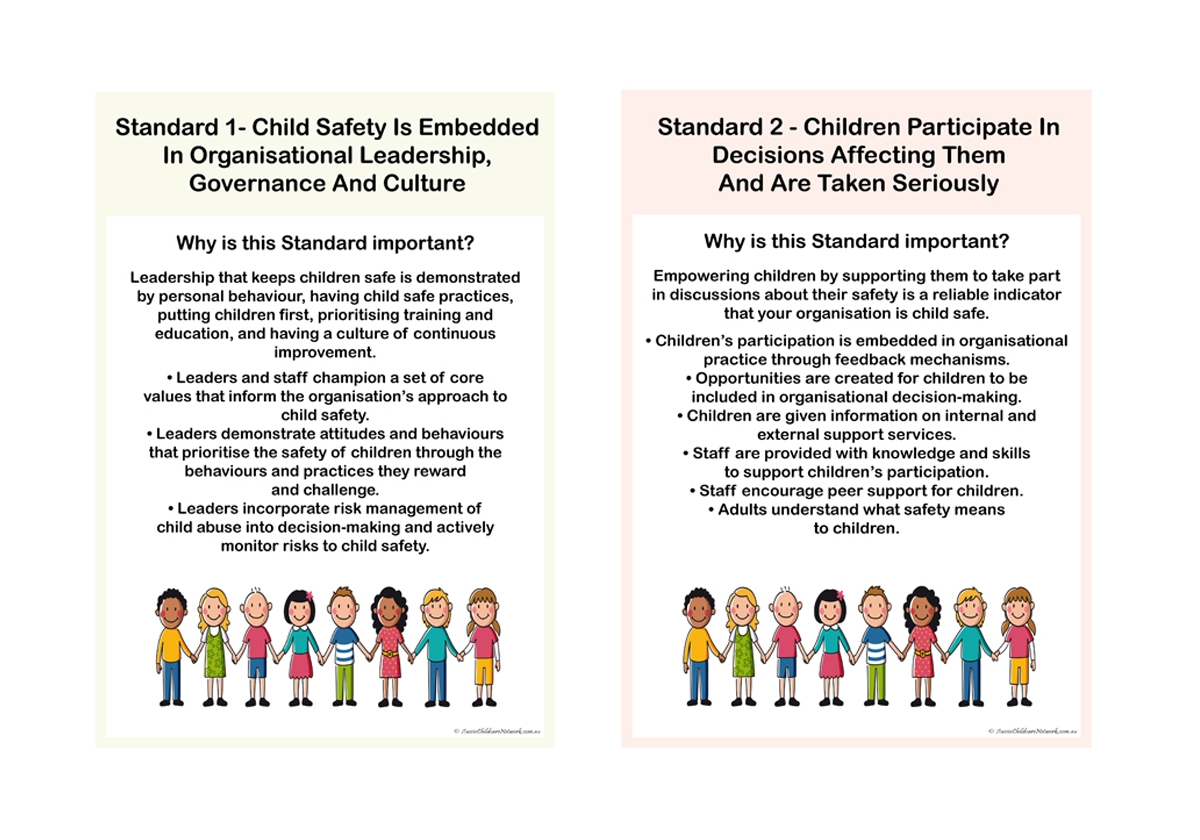
The Victoria's Child Safe Standards Posters are a set of mandatory requirements to protect children and young people from harm and abuse. The new 11 Child Safe Standards came into force in Victoria on 1 July 2022.
The NSW Child Safe Standards Posters display each of the 10 standards as well as details on why each standard is important and how this standard can be applied in the service. The Child Safe Standards establish a standard so that...
The aim of Quality Area 1 is to ensure that the educational programs and practices of educators are child-centred, stimulating and maximise opportunities for enhancing and extending each child’s learning and development. In the sc...